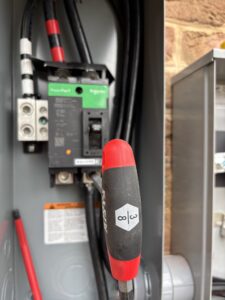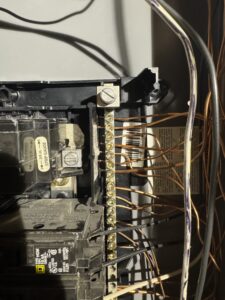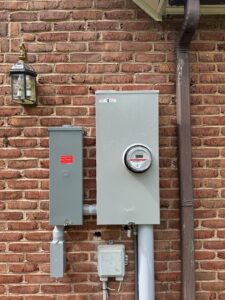
Every home in the Eastern Panhandle takes surges. Some come from lightning on the ridges, some from the utility switching lines after a storm, and most come from inside the house, every time the AC, well pump or a motor kicks on. Small surges add up. They wear out the electronics in your furnace, heat pump, appliances and chargers long before their time. A whole home surge protector at the panel is the first line of defense, and one of the simplest upgrades we install.
At a Glance
What a whole home surge protector does
- Mounts at the panel and clamps surges before they reach your circuits.
- Protects things a plug-in strip cannot, like the HVAC board, range, well pump controls and garage door opener.
- Works best paired with good grounding and point-of-use protection for sensitive electronics.
- Newer codes require surge protection when a service is replaced or upgraded.
Where surges come from
- Lightning: a strike near a line or the house can push a large surge through the service.
- Utility switching: when power is restored or rerouted after storms, voltage can spike.
- Inside the house: motors and compressors starting and stopping create small, frequent surges.
- Generators: a poorly matched or failing generator can also send rough power.
Whole home vs. plug-in strips
| Whole home surge protector | Plug-in surge strip | |
|---|---|---|
| Where | At the main panel | At the outlet |
| Protects | Every circuit, including hardwired equipment | Only what is plugged into it |
| Best for | HVAC, appliances, well and sump controls, lighting | TVs, computers, networking gear |
| Together | Yes, use both for layered protection | Yes, use both for layered protection |
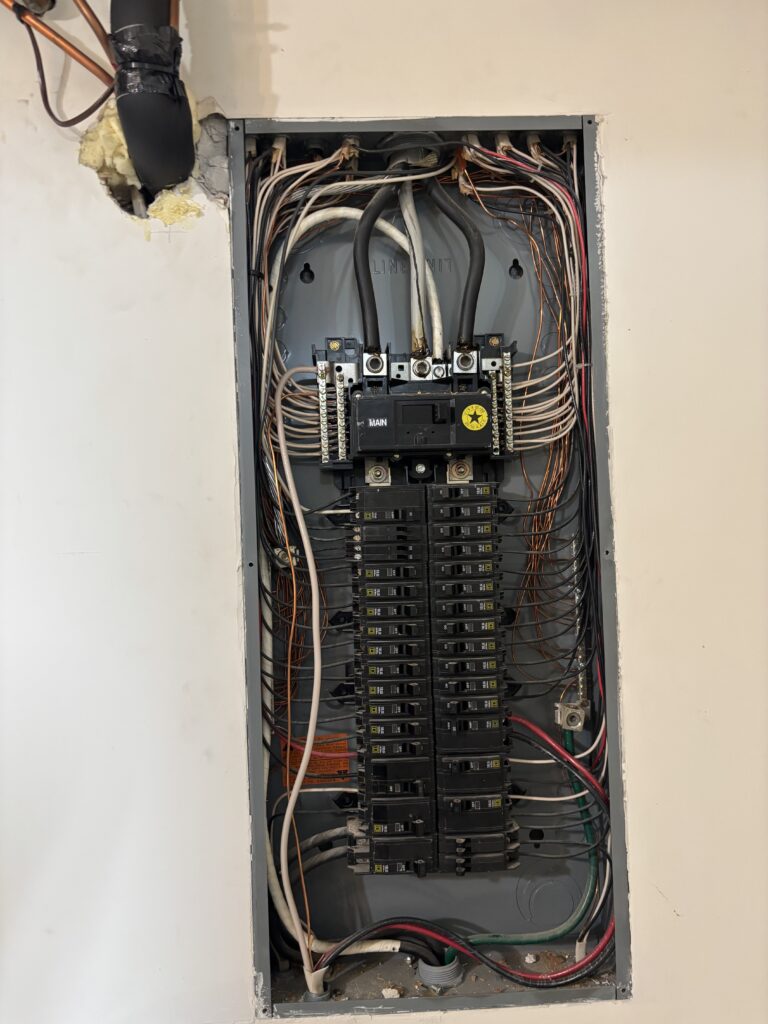
How we install it
1. Check the grounding
A surge protector only works as well as the grounding and bonding behind it, so we check those first.
2. Pick the device
A Type 2 surge protective device rated for your panel and service.
3. Mount and wire
Installed at the panel with short, direct leads so it reacts fast.
4. Confirm and label
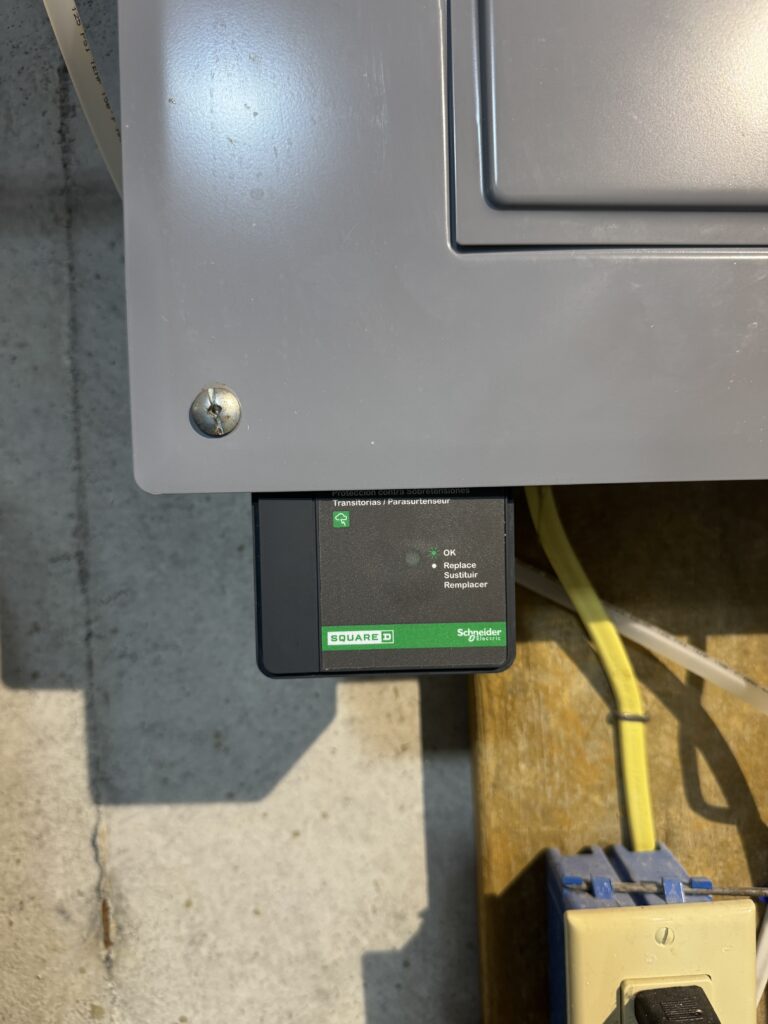
We confirm the status indicator and show you what to look for.
Good to Know
Surge protectors wear out as they absorb surges. Most whole home units have a status light. If the light changes, the device has done its job and needs replacing.
Corrected a problem that I had with my water softener electrical connection. Install a new connection and now everything works perfectly fine.
David Allen · Google Review
Why it matters here
Storms off the Blue Ridge and long rural lines mean homes around Shepherdstown, Harpers Ferry and Kearneysville see more outages and restores than city homes do. Rural homes also depend on equipment a surge can take out: well pump controls, sump pumps, water treatment and HVAC boards. If you are adding a Generac standby generator or doing a panel upgrade, a surge protector belongs in the same project.
Frequently Asked Questions
Does a whole home surge protector stop lightning?
No device stops a direct strike. A surge protector limits the surges that come in on the service and wiring, which is what damages most equipment.
Do I still need surge strips?
Yes, for sensitive electronics. Panel protection and point-of-use strips work best together.
Is it required by code?
Newer codes require surge protection when a service is replaced or upgraded. For existing homes it is a smart, simple add.
How long does a surge protector last?
It depends on how many surges it absorbs. Watch the status light and replace it when it signals.
Related reading: whole home surge protection, Generac generators and 7 signs you need an electrician.
Built on Trust. Defined by Execution.
Protect what is plugged in, and what is not
We will check your grounding, install the right surge protector and show you how to keep an eye on it.
Request Service