Martinsburg has homes from every decade of the last century, from downtown rowhouses to 1970s ranches, and the wiring shows it. Older wiring is not automatically dangerous, but it was never built for the way a house is used today. Here is what we find when we open walls in older homes around Martinsburg and Berkeley County, and how we handle it.
At a Glance
What older wiring means for you
- Knob-and-tube, cloth and aluminum wiring are common in older Martinsburg homes.
- Not every house needs a full rewire. Some need targeted repairs.
- Most rewiring is fished through walls with small access holes.
- Rewiring is permitted and inspected work.
The wiring we find most often
- Knob-and-tube. Common in homes built before the 1940s. It has no ground, the insulation gets brittle, and it was never meant to be buried in insulation.
- Cloth-insulated cable. The step after knob-and-tube. The rubber and cloth jacket breaks down with age and heat.
- Aluminum branch wiring. Used in some homes from the late 1960s and early 1970s. The wire itself is not the problem. The connections at outlets and switches are, because they loosen and overheat.
- Two-prong, ungrounded outlets. No ground for surge protectors or modern electronics, and often swapped for three-prong outlets without one.
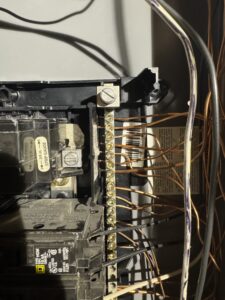
- Wiring added in layers. Every owner added a circuit or extended one, and nobody ever went back to clean it up.
Signs your wiring is due
- Breakers that trip or fuses that blow regularly.
- Outlets or switch plates that feel warm, or lights that flicker.
- Mostly two-prong outlets, or three-prong outlets that test as ungrounded.
- An insurance company asking about knob-and-tube or the age of your panel.
- A remodel coming up. Opening walls is the cheapest time to rewire them.
Partial or whole-house rewiring?
Not every older home needs a full rewire. Sometimes the right answer is replacing the worst circuits, adding dedicated circuits for the kitchen and bath, and repairing aluminum connections with approved connectors. Other times, especially with active knob-and-tube or a panel that is out of room, a whole-house rewire is simpler and cheaper in the long run. We walk the house, open a few boxes, and tell you which one you are looking at before we price anything.
How we rewire without wrecking the house
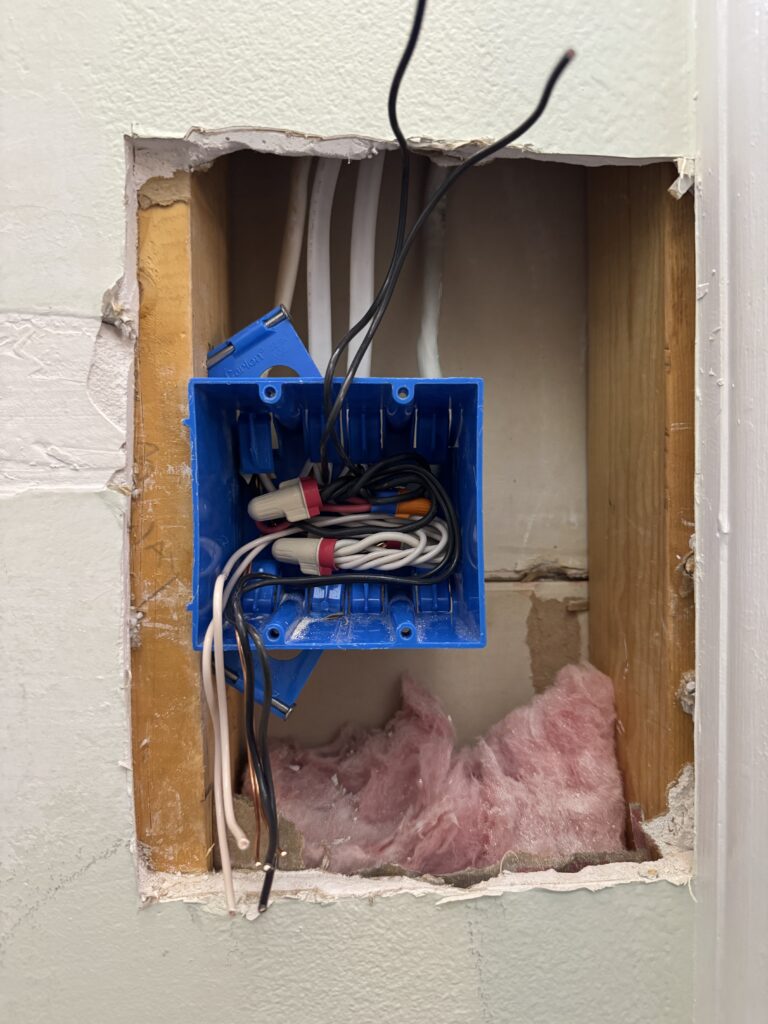
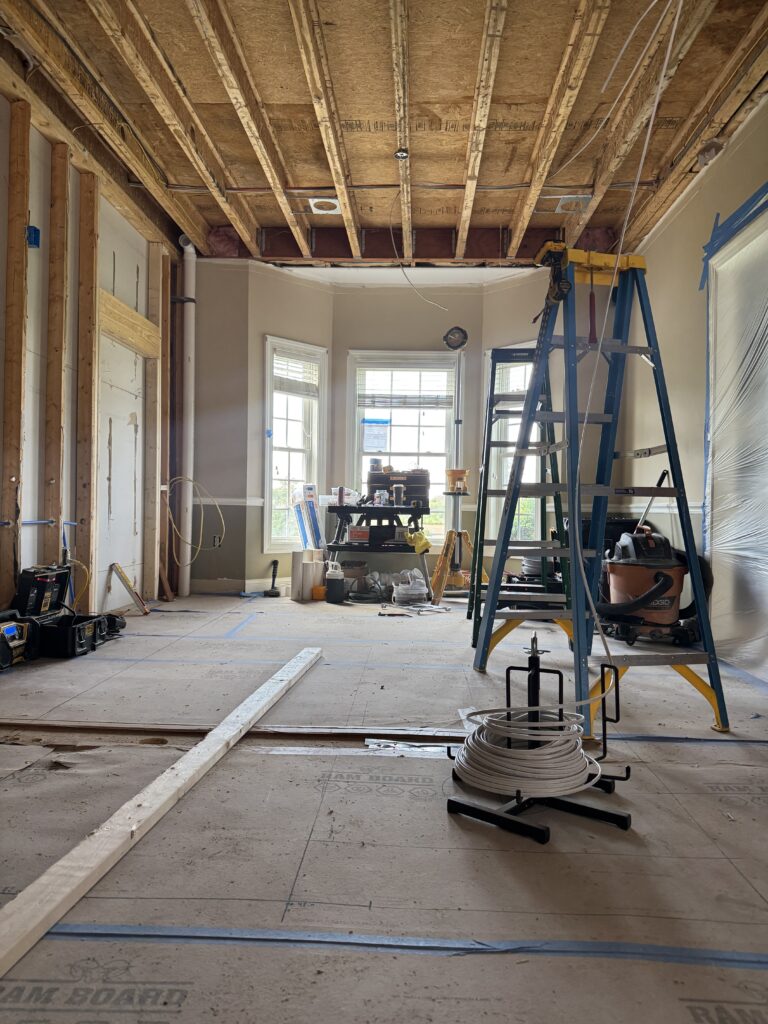
Most rewiring in finished homes is done by fishing new cable through walls and ceilings from the attic and basement, with small access holes where we need them. We plan the route before we start, protect floors and furniture, and keep the holes as few and as small as we can. Old wiring that is fully disconnected is left in place or removed where it is easy to reach.
Permits and inspection
Rewiring is permitted work. We pull the permit, schedule the rough-in inspection before anything is closed up, and finish with a final inspection. When we are done you get a labeled panel and wiring that is grounded, protected and up to current code.
Frequently Asked Questions
Can I live in the house during a rewire?
Usually, yes. We work room by room and restore power at the end of each day wherever we can.
Is knob-and-tube wiring illegal?
No, existing knob-and-tube is not illegal on its own. It is ungrounded, often damaged after decades of changes, and many insurers will not cover it, which is why most owners choose to replace it.
Do I need a new panel too?
Often, but not always. If the panel is full, outdated, or the service is 100 amps or less, it usually makes sense to upgrade the panel at the same time.
Thinking about rewiring an older home? Read about our home rewiring and panel upgrades, see our work in Martinsburg and Inwood, or call 681-283-0093 to set up a walkthrough.
Built on Trust. Defined by Execution.
Living with old wiring?
We will walk the house, open a few boxes, and tell you honestly whether you need repairs or a rewire.
Schedule a Walkthrough